
Choosing an Indoor Positioning System (IPS) can seem daunting. These systems can make a huge difference in productivity and cost savings, but there are so many technologies and specifications. How do you choose? This brief guide outlines how to define your needs, choose between technologies, and evaluate vendors so you can achieve your project goals.
What is an Indoor Positioning System?
An Indoor Positioning System or IPS is basically a system that works like GPS, but indoors. At minimum, the IPS system must be able to identify the exact position of an item or person. IPS can be leveraged for a whole bundle of extremely valuable use cases. Here are a few:
Common IPS Use Cases
1.
Finding Assets
Know where everything is, when you need it.
2.
Improving Production Flow
Optimize movement and improve efficiency.
3.
Safety and Compliance
Protect people, ensure compliance, and respond with confidence.
4.
Automation
Enable and optimize automated operations.
For a deep technical dive into IPS, here is an indepth research piece: Indoor positioning systems in industry 4.0 applications: Current status, opportunities, and future trends by Li et al. in Elsevier.
Why Indoor Visibility Matters?
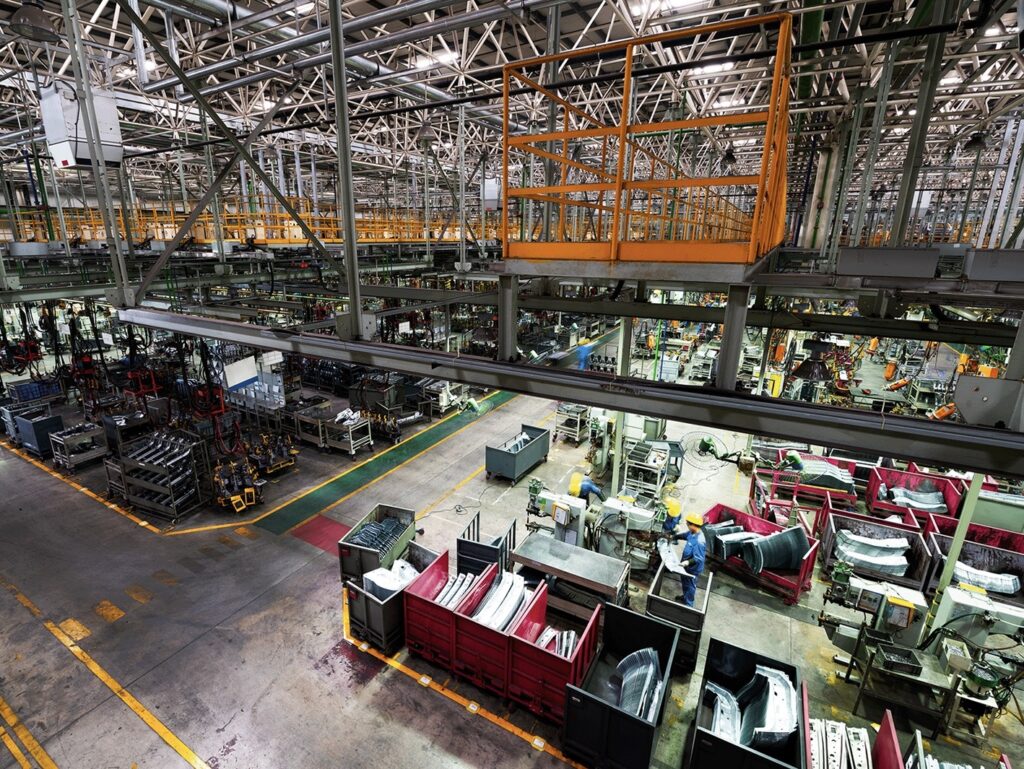
The choice to install an Indoor Positioning System in manufacturing generally comes down to gaining better visibility in operations to save time and reduce costs. Most companies are collecting a huge amount of data on their operations already. According to Dr. Seth Hollar, CEO at WISER Systems, many companies decide to look for an IPS to improve the quality of their ERP/MES system. As he explained,
“So essentially where people operated previously was through their MES system or ERP system. There might be a first step of logging in, scanning the materials, and starting a specific sequence. That in turn would record a certain event into the ERP system, but that machine doesn’t move, and you must assume everything around it is stationed correctly.”
An Indoor Positioning System fills this visibility gap by adding location data to operational systems. Instead of only knowing when an item was scanned and having to make assumptions about where it was scanned, manufacturers gain visibility into where it is now and how it got there.
Decision Making Roadmap for IPS
When evaluating an IPS solution, manufacturers should answer five questions first:
- What business outcome are you trying to achieve? What problem are you solving?
- How accurate does the location data need to be?
- Do you need continuous tracking or event-based tracking?
- How much of the facility needs coverage?
- How many assets, people, or vehicles will be tracked?
This will give you the information that you need to assess the different technologies. You do not need an RF engineer to parse through all the technological options, but you do need to understand those core needs.
What Problem Am I Solving?
A large aerospace company had to track precisely manufactured fan blades and the associated paperwork. They were building a backlog of 90 days and 15,000 units. With a Wiser system, they quickly whittled that down to 31 days and 6,000 units.
When thinking about purchasing a system, it is important to take a step back and look at your business processes. You know your operations better than anyone. Where are the bottlenecks and inefficiencies in your operations? Where are there blind spots and where would adding more visibility help you improve efficiency?
As Dr. Hollar explains “When you buy a system, you really need to think about: How you're going to use that system? How you're going to save money using it? And what sort of advantages you get from having that system?”
Take a moment to step back and outline the following:
- Understand and map out your process
- Take an honest look at where the problems are
- Get different points of view from different departments (operations, facilities, IT)
Then figuring out which system and vendors can appropriately solve that problem becomes easier.
Which Indoor Positioning System Will Solve This?
If you are looking at an indoor positioning system, the three major factors to look at are, according to Dr. Hollar “accuracy, where you're actually doing tracking, and frequency of update reads.” This must be balanced against cost and maintenance of the system and long-term ROI. We’ll walk through these factors in more detail, but the following chart provides a nice summary:
Wireless Indoor Positioning Technologies
 Accuracy
 Coverage
 Battery Life
 Best Use Cases
 Key Advantage
 Key Limitation

 10–30 cm
 Facility-wide
 3–5 Years
 Manufacturing, WIP tracking, automation
 Centimeter-level precision, immune to metal & RF clutter
 Requires dedicated anchor infrastructure

 3–10 m
Facility-wide
3–10 m
Facility-wide
 1–3 Years
 Basic asset tracking
 Smartphones can serve as roaming hubs
 RF interference degrades accuracy at scale
 3–10 m
Facility-wide
3–10 m
Facility-wide
 Days–Weeks
 Leverages existing infrastructure
 Reuses existing network — minimal new hardware
 High tag power draw, frequent recharging needed

 Portal-level
 Point locations only
 N/A (passive)
 Inventory movement, compliance
 Bulk-scan 100s of items simultaneously
 No real-time location — choke-point only
Accuracy:
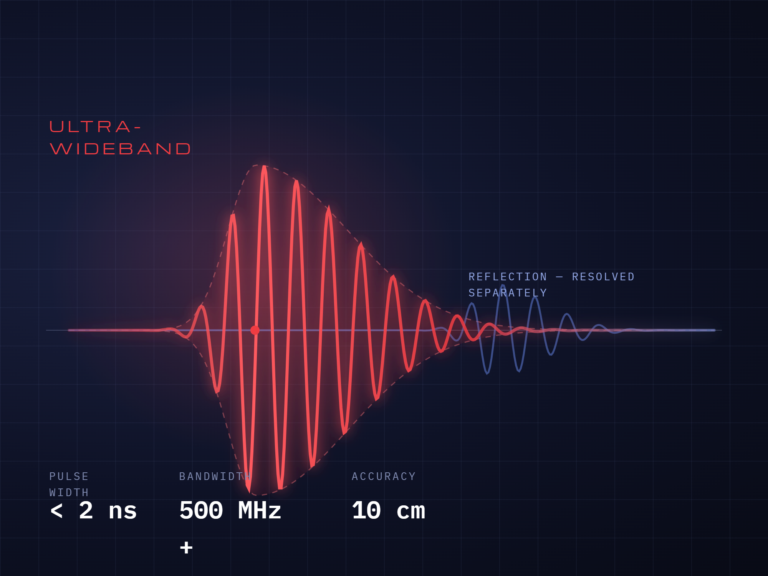
When looking at technologies, accuracy is a primary consideration. According to Dr. Hollar, “Bluetooth, or Wi-Fi tend to have relatively low accuracy. So you might know where an item is within a 25-foot radius or more or that they are within a room.
If you need sub-yard accuracy, UWB is going to be a better solution. It also will perform better in an environment with a lot of reflections and metal than Bluetooth or Wi-Fi will.”
For outdoor environments, for example a yard surrounding a manufacturing facility, GPS is a good option, but the accuracy will only be about 30 feet. If you want a seamless option for both indoors and outside, make sure to ask if the same solution can be adopted for both with the accuracy you need.
Tracking Coverage (Where are You Tracking?)
Notably RFID can be quite accurate, but you are only getting one location at one point in time. As Dr. Hollar explains, “If you're going through an RFID portal, you know it went through, but then what?” You don’t know where it went until the item gets to the next portal.
If you want coverage over every yard of your facility, you’re going to need a lot of scanners or a different solution.
Update Rates (Periodic vs Continuous Visibility)
Also with the RFID portal, you will only get the next location update when the item goes through another portal or when it is scanned by hand if that hand scanner’s location is known.
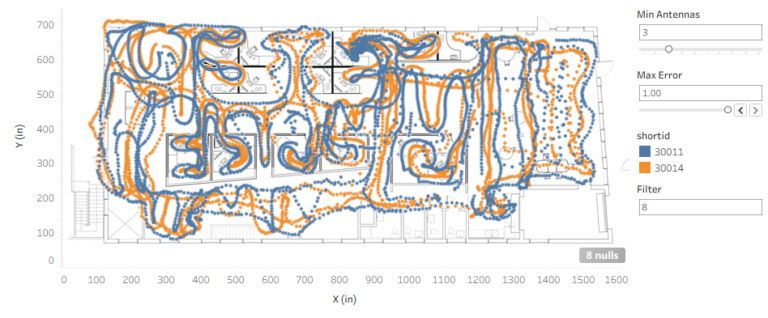
With RFID and more periodic Location Positioning Systems, you have a snapshot of one point in time of the location of that item. You don’t get the continuous “video” of all the locations over time that you get with real-time systems. You just get that portal scan point. Wi-Fi, BLE, and UWB can give you that “video level” of visibility.
Tradeoffs: Accuracy and Coverage vs Cost
We’ve covered the ins and outs of accuracy, coverage, and update rates, but in addition a company should examine the cost. The Total Cost of Ownership (TCO) for an IPS system includes the original hardware, installation costs, and maintenance costs. This of course must be balanced against the expected ROI of the project.
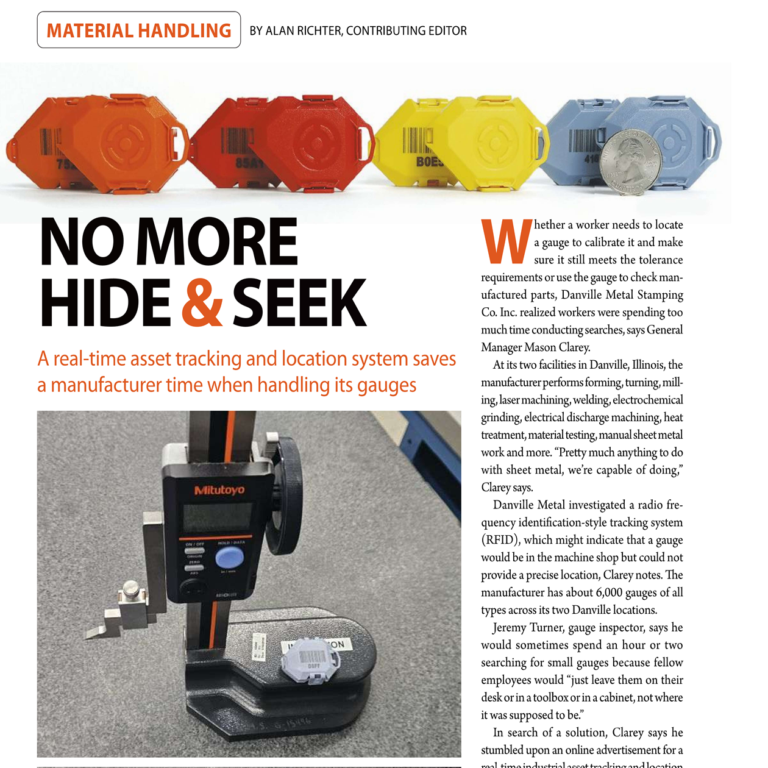
Unless it is a solution for a low number of assets, the highest initial hardware costs will be the tags. RFID tags themselves are very cheap, often disposable but the larger portal scanners are expensive and time intensive to tune while the hand scanners require human involvement. BLE, Wi-Fi, and UWB tags are all battery powered devices and will be more expensive. Most companies try to reuse the tags to save on costs.
For a low tag count system, the antenna infrastructure becomes a bigger percentage of the deal. In these cases, look at the number of antennas or receivers that need to go up as well as how difficult it will take to install and tune/calibrate them. It’s good to ask questions like
- For the physical installation, can I do this or use my own crew?
- How much lift time will be needed? Will this disrupt business operations?
- What is the required maintenance? If I change my floor plan, will it still work?
Integration
Location data is most valuable when it becomes part of existing workflows. Before selecting an IPS, determine how the data will connect with systems such as:
- ERP
- MES
- WMS
- CMMS
- Business intelligence tools
Ask vendors whether APIs are available and whether they have existing integrations with the systems you already use. Ask if the vendor can help with integration for a reasonable fee.
Scalability for the Future
So you’ve thought of one major problem to solve, but all operators can find new areas of improvement down the road. It’s important to understand the scalability of the solution. Most IPS solutions can address more than one use case. Ask if you can leverage the infrastructure with more tags easily or if it’s straightforward to add additional lines or even buildings to your trackable areas. This will give you a sense if the solution will work well later as you find new problems or need to pivot into new areas.
Selecting and Talking with Vendors
You can actually do a fair amount of research and trade-off analysis while talking to vendors. For your convenience, below is a checklist for some key questions to ask potential vendors. But remember it’s always great to talk to these vendors. They should know their systems and be able to help you find the right solution for you. They can give you unique ideas on how to solve a problem that you may not have even considered.
1. Performance
Ensure the system meets your accuracy and reliability needs.
2. Installation
Understand the deployment process and impact on your facility.
3. Operations
Evaluate the ongoing effort to keep the system running.
4. Integration
Confirm the system fits your technology ecosystem and business processes.
In Conclusion
The best indoor positioning system is not necessarily the most accurate system. It’s the system that solves the right business problem at the right cost.
Manufacturers should start by identifying the operational challenges they want to solve, then evaluate technologies based on accuracy, coverage, update frequency, integration capabilities, and total cost of ownership. By focusing on outcomes first and technology second, organizations are more likely to find a solution that delivers measurable ROI and long-term value.
If you'd like help evaluating options or determining which approach fits your environment, the team at WISER Systems would be happy to discuss your application and requirements.
Frequently Asked Questions
Ultra-Wideband (UWB) typically provides the highest accuracy, often within a few inches. BLE and Wi-Fi solutions generally provide room-level or zone-level accuracy, while RFID provides reader-location level information at specific scan points or portals.
It depends on the problem you are trying to solve. RFID is often sufficient when you only need to know when an item passes a specific checkpoint. Real-time location systems (RTLS) are better suited for applications requiring continuous visibility, such as tracking work-in-process inventory, tools and equipment, or high-value assets throughout a facility.
Most modern IPS and RTLS solutions can integrate with ERP, MES, WMS, and other operational systems through APIs, shared databases, or custom integrations. These integrations allow location data to become part of existing workflows and business processes.
Some technologies perform better than others in metal-rich environments. UWB is often preferred in manufacturing facilities because it generally handles reflections and interference better than many Wi-Fi and BLE-based solutions. However, every facility is different, and site testing is recommended.
An indoor positioning system works like GPS, but indoors. At minimum it identifies the exact position of an item or person. Manufacturers use an IPS to find assets, improve production flow, support safety and compliance, and enable automation such as AGVs and robotic workflows with precise, real-time location data.
WISER recommends answering five questions first: What business outcome are you trying to achieve? How accurate does the location data need to be? Do you need continuous or event-based tracking? How much of the facility needs coverage? And how many assets, people, or vehicles will you track?
Total cost of ownership includes the original hardware, installation, and ongoing maintenance, all balanced against expected ROI. For most systems the battery-powered tags are the largest hardware cost, so companies often reuse them. For low tag counts, antenna infrastructure and how hard it is to install and calibrate become a bigger share.
WISER suggests asking vendors about performance (accuracy, continuous tracking, behavior around metal), installation (deployment time, disruption, calibration), operations (maintenance, batteries, updates), and integration (supported systems and APIs). It also recommends requesting references, case studies, and ROI examples from companies in your own industry before deciding.