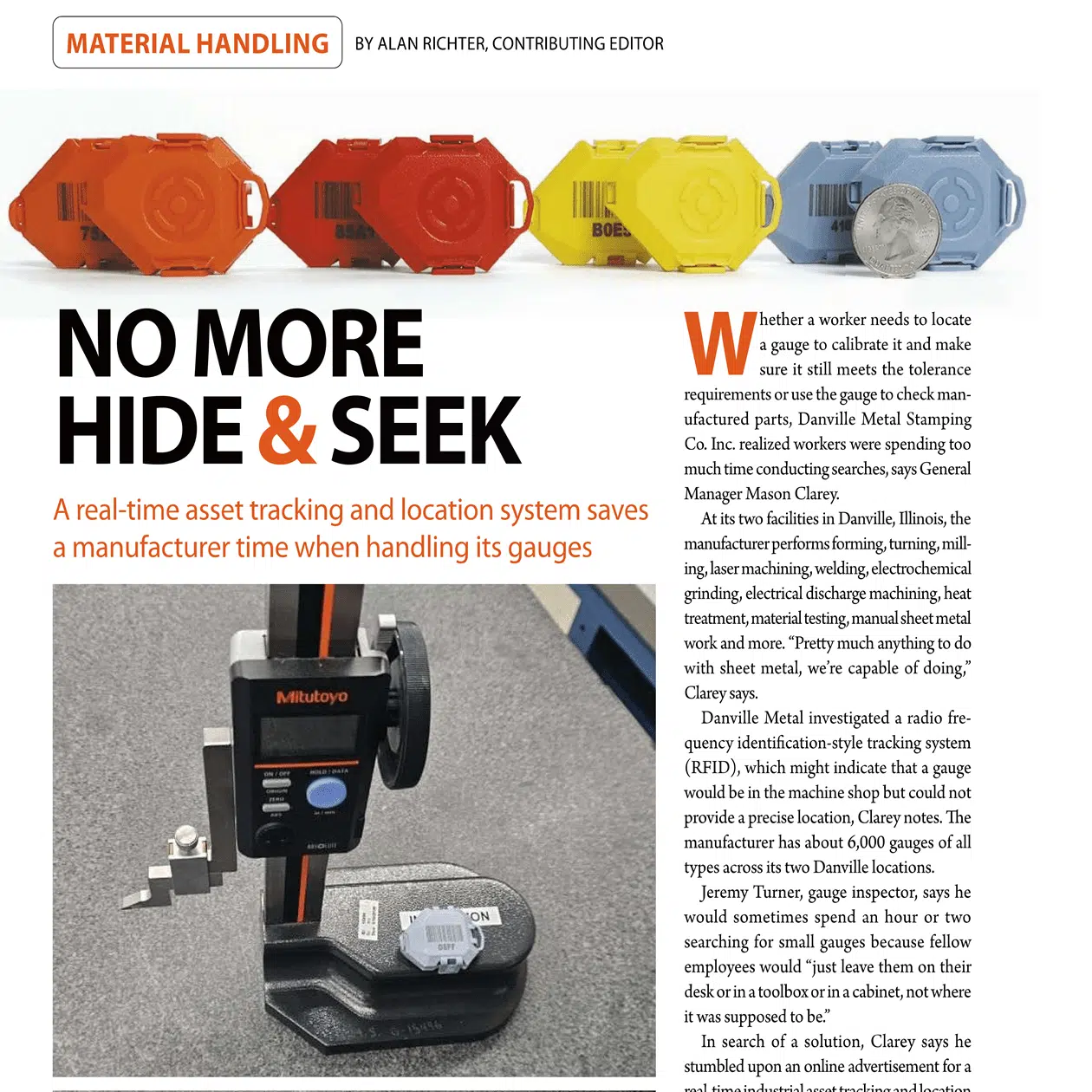

WISER’s advanced asset tracking and real-time location system streamlines operations and reduces the risk of asset loss in any industry. By providing real-time tracking and reporting of key assets’ locations, customers can monitor the progress of manufacturing processes and quickly locate individual parts as needed. This system enables customers to optimize their workflow and improve operational efficiency.
THE CHALLENGE: UNANTICIPATED DOWNTIME COSTS
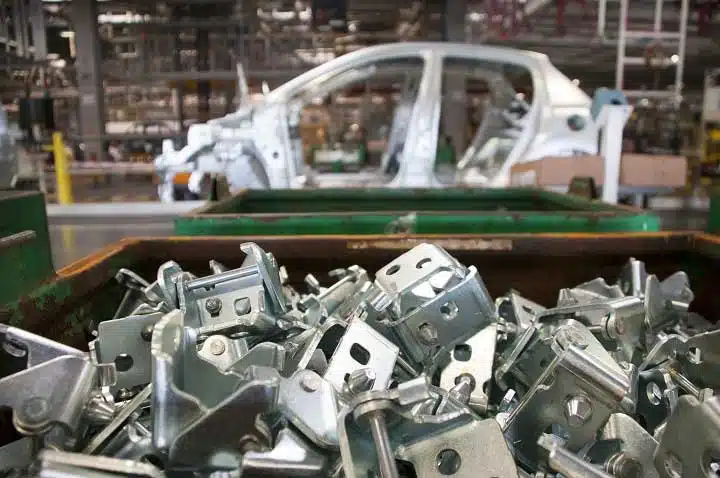
Unplanned downtime in automotive manufacturing can result in significant financial losses for every minute a production line is shut down. These downtime incidents often trigger a chain reaction, causing delays in multiple processes, impacting both upstream and downstream production processes. This also results in wasting valuable time for highly skilled employees, hindering their ability to perform other critical tasks.
Manually tracking inventory is another challenge that often requires halting production for hours and consumes time that could be devoted to quality control, process improvement, or other essential operations. This manual process can also lead to errors and result in additional delays.
To avoid these unanticipated costs and disruptions, it’s crucial to proactively identify and resolve production issues before they can impact the manufacturing process.
THE SOLUTION: WISER’S ASSET TRACKING SYSTEM
In an automotive factory, WISER tracker tags are placed on small but valuable parts like work orders, gauges, and tools. They might also be placed on bins, totes, or parts moving through specific locations at preset times for assembly.
After this, WISER’s location system immediately identifies and tracks tagged parts. The system syncs tag coordinates with a facility map or floor plan so that all tagged assets can be found easily at any stage of the production process. This automates inventory for tagged parts. It also mitigates the risks of loss and unneeded replacements.
Many conventional tracking systems perform poorly around metal or in highly cluttered and reflective settings like factories. Yet WISER’s system registers the location of each asset with sub-meter accuracy, and with inch-level precision in many cases. This gives manufacturers the ability to locate even the smallest parts at an instant’s notice.
THE RESULTS: ENHANCED EFFICIENCY IN MANUFACTURING WITH WISER’S ASSET TRACKING TECHNOLOGY
WISER’s asset tracking technology enables manufacturers to make informed decisions based on real-time results and insights. This leads to improved efficiency on the production floor and a better overall production process. By utilizing WISER’s technology, manufacturers can take their operations to the next level and achieve their goals with greater ease and accuracy.
Frequently Asked Questions
Significant financial losses for every minute a production line is shut down. These incidents often trigger a chain reaction delaying multiple processes upstream and downstream, and they waste time for highly skilled employees who could be performing other critical tasks.
WISER tracker tags go on small but valuable parts such as work orders, gauges, and tools. They might also be placed on bins, totes, or parts moving through specific locations at preset times for assembly, so tagged assets stay findable at any production stage.
Because many perform poorly around metal or in highly cluttered and reflective settings. WISER’s system registers the location of each asset with sub-meter accuracy, and with inch-level precision in many cases, giving manufacturers the ability to locate even the smallest parts at an instant’s notice.
Production time. It often requires halting production for hours, consuming time that could be devoted to quality control, process improvement, or other essential operations. The manual process can also introduce errors that result in additional delays on top of the stoppage itself.
Real-time results and insights that support informed decisions, leading to improved efficiency on the production floor and a better overall production process. Tagged part coordinates sync with a facility map or floor plan, automating inventory and mitigating the risks of loss and unneeded replacements.